


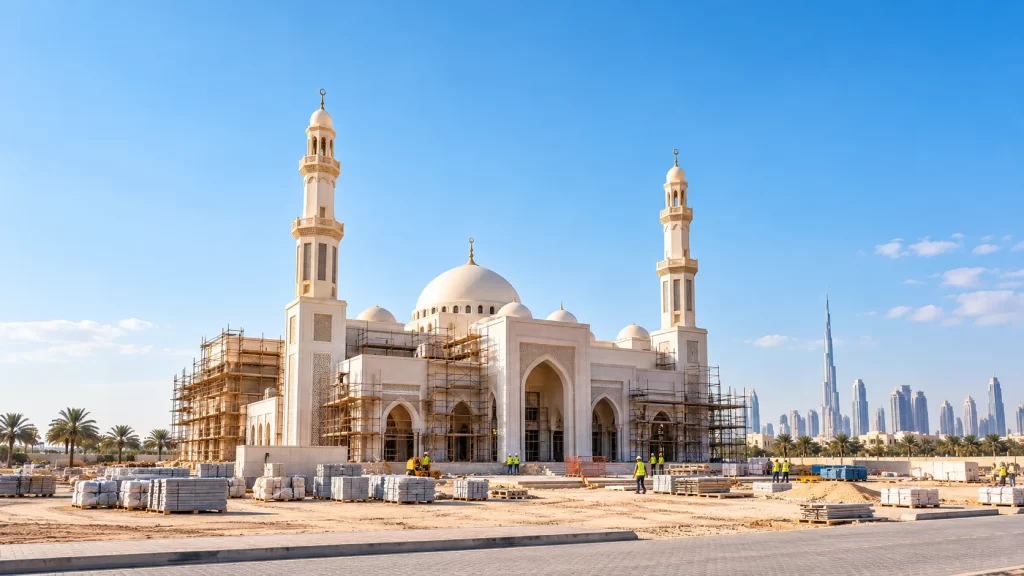
Mosque Construction UAE: Planning & Key Considerations
Discover key considerations for mosque construction in the UAE, from prayer hall layouts and ablution facilities to building services and approvals.
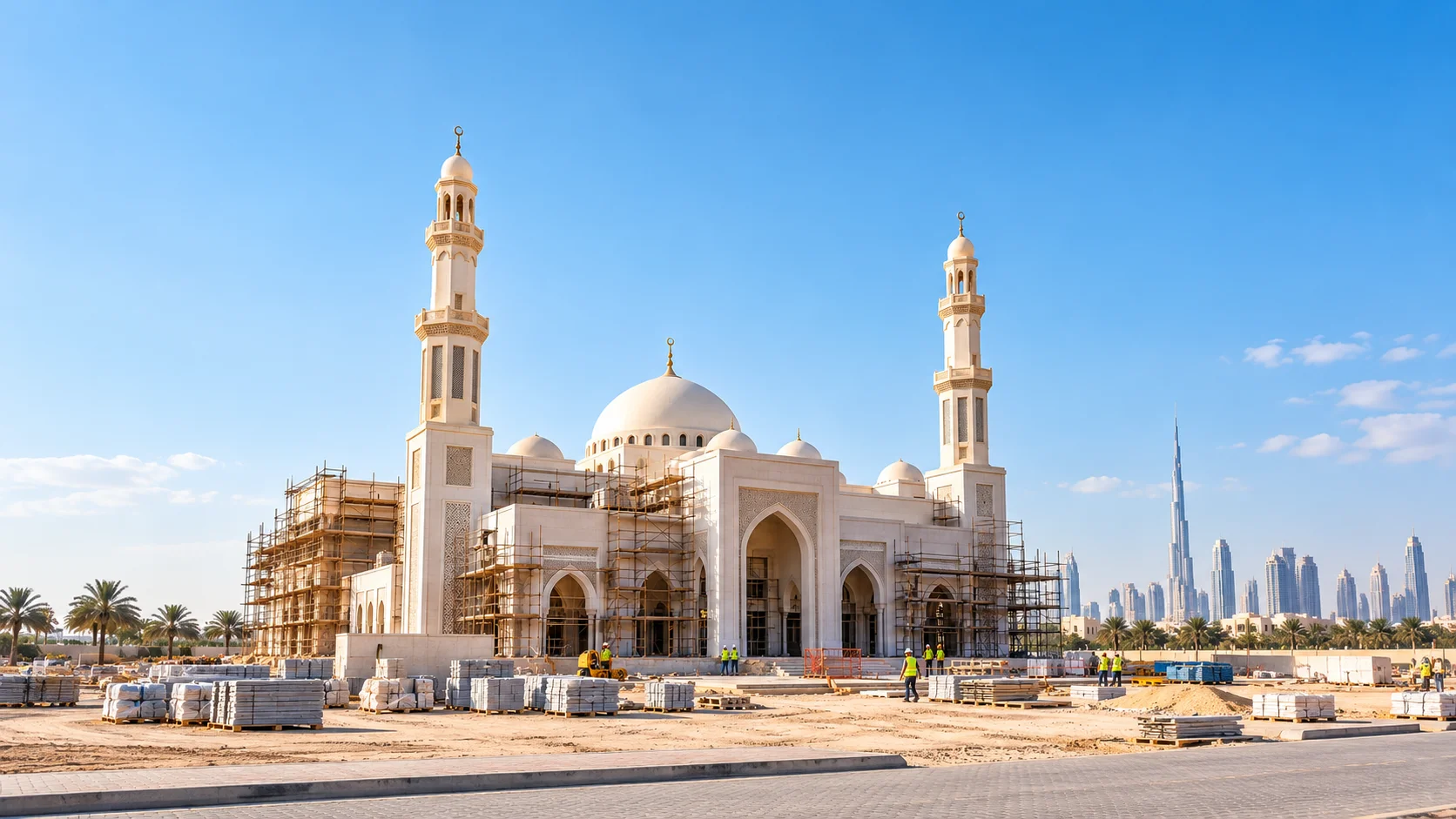
Mosque Construction UAE requires careful planning to create a welcoming, functional space for daily prayers and Friday congregations. From the prayer hall layout to ablution facilities and easy access, every detail should support the needs of worshippers.
These details are easier to address when they are considered at the beginning of the project. Decisions about the prayer hall layout, entrances, ventilation, acoustics, and supporting facilities can affect how the building functions once it opens.
If you are planning mosque construction in the UAE, here are the key considerations to discuss before design and construction begin.
Before finalising a design, establish how the mosque will be used.
A neighbourhood mosque serving regular daily prayers may have different space requirements from a mosque expected to accommodate larger congregations, Friday prayers, or community activities.
Start by considering:
A clear project brief gives the design team a better starting point and helps reduce the likelihood of major layout changes later.
The prayer hall is the central space of the mosque, so its layout deserves careful attention.
The layout needs to accommodate orderly prayer rows and the correct qibla orientation. These requirements should be considered early, alongside the positioning of the mihrab and minbar where included in the design.
Worshippers should be able to enter, find their place, and leave without unnecessary congestion. Door positions, corridors, shoe storage, and the connection between the entrance and prayer hall all influence how smoothly people move through the building.
Lighting should support a comfortable environment for prayer and reading. Acoustic planning also matters: the imam’s voice should be clear throughout the prayer hall without excessive echo.
These decisions need to work together rather than being treated as finishing details at the end of construction.
Ablution facilities are essential to the everyday use of a mosque. Their location and layout should make them easy to reach while maintaining a practical connection to the prayer areas.
During planning, consider:
Poor coordination in wet areas can lead to maintenance problems after handover. Plumbing, drainage, waterproofing, and floor finishes should therefore be coordinated before installation begins.
Mosques can experience significant changes in occupancy throughout the day, particularly during Friday prayers and religious occasions. Building services should be planned around the intended capacity and operating conditions.
Air conditioning and ventilation: The system should be designed for the building’s layout, occupancy, and local climate. Air distribution, equipment access, and maintenance requirements all deserve attention.
Lighting and electrical systems: Lighting needs vary between the prayer hall, entrances, corridors, ablution areas, and external spaces. Electrical provisions should reflect the actual use of each area.
Plumbing and drainage: Water supply, drainage routes, and access for future maintenance should be coordinated with the architectural and structural design.
Sound systems: Where a public-address system is required, speaker locations and acoustic performance should be considered early to help deliver clear, even sound.
Coordinating these services before construction progresses can help avoid clashes, rework, and difficult maintenance access.
A mosque needs to be welcoming, but its materials also need to suit the way the building will be used.
When comparing finishes, look beyond appearance alone.
Flooring: Consider durability, ease of cleaning, comfort, and suitability for prayer areas.
Walls and ceilings: Select finishes appropriate to the intended environment and maintenance needs.
Wet areas: Give particular attention to waterproofing, drainage, and slip resistance.
Doors and windows: Consider durability, security, ventilation requirements, and ease of operation.
External finishes: Account for exposure to the UAE’s heat, dust, and weather conditions.
The right specification depends on the design, budget, intended use, and maintenance plan. More expensive materials are not automatically the best choice; they need to provide value for the project.
Approval requirements can vary according to the project’s location, design, land use, and intended operation. Mosque projects may also require coordination with the relevant religious authority and other competent authorities.
Before committing to a construction programme, confirm:
Do not assume that approval requirements for one mosque will automatically apply to another. Confirm the applicable process with the relevant authorities before construction starts.
A quotation is easier to assess when it clearly explains what is included and what remains outside the proposed scope.
Before comparing contractors, check whether the quotation addresses:
Two quotations can look very different because they may not cover the same work. Ask for unclear items to be explained in writing before making a decision.
The lowest quotation does not necessarily represent the best overall value. The contractor also needs to understand the project requirements, coordinate the work, and communicate clearly when decisions are needed.
When assessing a contractor, consider the following.
Relevant construction capability: Ask about experience with comparable building requirements and the trades involved in your project. Check the evidence provided rather than relying on broad claims.
A clear scope of work: Make sure responsibilities, specifications, exclusions, and variations are documented.
Coordination of building services: Confirm how structural, electrical, plumbing, ventilation, and finishing works will be coordinated.
Communication and accountability: Establish who will handle day-to-day coordination, report progress, and raise issues that could affect cost or timing.
Quality checks and handover: Ask how completed work will be inspected, how defects will be addressed, and what documentation will be provided at handover.
Clear expectations from the outset help the project team make decisions with fewer misunderstandings.
Several problems can be reduced by addressing them before work begins.
The common thread is preparation. Clear decisions before construction help the team work from an agreed plan.
Although every project is different, mosque construction generally involves a series of coordinated stages.
Define the project brief: Establish the intended use, expected occupancy, required facilities, and project priorities.
Assess the site and develop the design: Consider site conditions, layout, access, structure, and building services.
Confirm approvals and scope: Identify the applicable authority requirements and clarify the construction package.
Plan and carry out construction: Coordinate trades, materials, inspections, and site activities against the agreed programme.
Inspect and prepare for handover: Address outstanding defects, complete applicable checks, and organise the required handover information.
The programme should be based on the actual project scope, approvals, site conditions, and construction requirements rather than a generic timeline.
Belresheed Building Contracting has been operating since 2004 and provides construction services across Dubai, Sharjah, and the wider UAE. Its listed capabilities include building contracting, air conditioning and ventilation, electromechanical works, plumbing and sanitary installation, flooring and tiling, painting, carpentry, and related finishing works.
For a mosque project, the appropriate scope depends on the specific design, required facilities, approvals, and work package. These details should be discussed and confirmed before any commitment is made.
A clear conversation about your project requirements is a practical starting point for understanding the scope of work and the next steps.
Whether you are at the early planning stage or preparing to discuss a construction package, start by defining the building’s needs, required facilities, and project scope.
Contact Belresheed Building Contracting to discuss your construction requirements in Dubai, Sharjah, or elsewhere in the UAE.
Discover key considerations for mosque construction in the UAE, from prayer hall layouts and ablution facilities to building services and approvals.
Planning a warehouse in Dubai? Explore site selection, layout, construction costs, approvals, and how to choose a contractor.
Learn what matters when choosing a commercial construction company in Dubai, from costs and timelines to quality and project management.