Construction Handover Checklist UAE: What to Inspect Before Accepting a Project

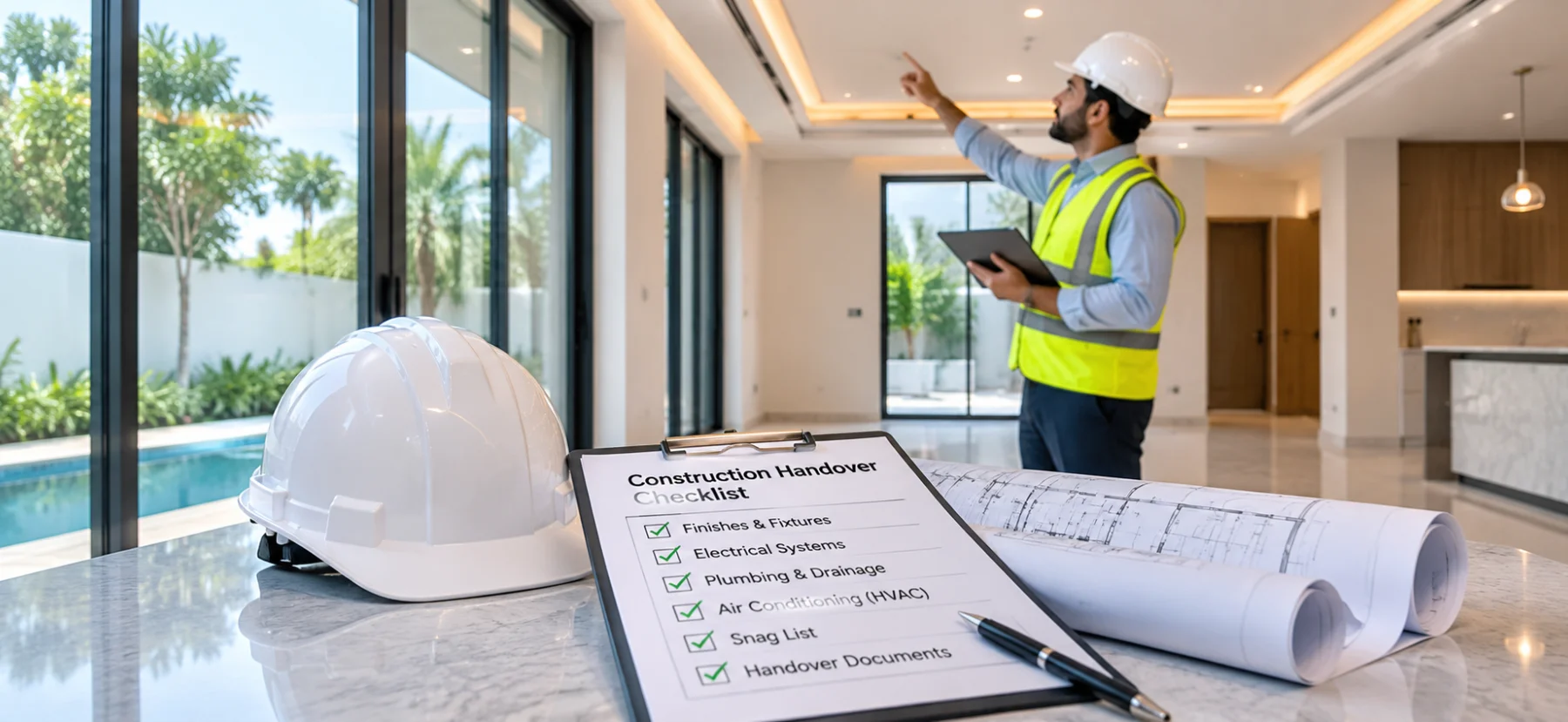
Construction handover checklist UAE being reviewed by an engineer during a completed villa inspection.

A Construction Handover Checklist UAE helps property owners inspect a completed building before accepting the project. It guides you through checking finishes, testing electrical and plumbing systems, reviewing air conditioning, recording defects, and collecting essential handover documents. Whether you are accepting a villa, commercial property, or another building, a thorough inspection helps you identify outstanding work and clarify what needs attention before final acceptance.

Construction handover involves more than receiving the keys. You also need to confirm that the completed work meets the agreed requirements and that the installed systems operate as expected. Taking time to inspect the property can help you avoid overlooking important details.

What to Inspect Before Construction Handover

1. Inspect the Walls, Floors, Ceilings and Finishes

Start with the visible parts of the building. Walk through every room and examine the quality and condition of the finishes.

Pay attention to:

  • Walls and ceilings: Look for cracks, uneven surfaces, stains, and poor paintwork.

  • Flooring: Check for cracked tiles, loose sections, uneven levels, and damaged edges.

  • Doors and windows: Make sure they open and close smoothly, align correctly, and have secure locks.

  • Cabinets and wardrobes: Inspect the installation, hinges, handles, and visible finishes.

  • Kitchen and bathroom fittings: Look for damage, leaks, and incomplete sealing.

  • External finishes: Review balconies, terraces, and other accessible areas.

Record every issue and note its exact location. This gives the contractor a clear reference when arranging corrections.

2. Test the Electrical Systems

Electrical installations need attention before you accept the building. Although switches and sockets may look complete, you should also check their operation.

Review the following:

  • Light switches and installed lighting fixtures.

  • Power sockets and their visible condition.

  • Distribution boards and circuit labelling.

  • Outdoor lighting and electrical points.

  • Doorbells, intercoms, and other installed electrical features.

Where specialist testing is necessary, arrange for a qualified professional to carry it out. Never attempt to inspect live electrical components yourself.

3. Check the Air Conditioning and Ventilation

Air conditioning plays an important role in buildings across the UAE. For this reason, include the HVAC system in your handover inspection rather than assuming that installation means everything works correctly.

During the walkthrough, check:

  • Whether the air conditioning units operate.

  • Whether each room receives adequate airflow.

  • Whether thermostats and controls respond correctly.

  • Whether you notice unusual noises or visible water leaks.

  • Whether ventilation points and exhaust fans operate as intended.

  • Whether accessible filters and components are clean.

Also, ask for the relevant operating instructions and maintenance information.

4. Inspect Plumbing and Sanitary Installations

Plumbing problems can cause damage when they go unnoticed. Therefore, check the visible fixtures and test accessible water outlets before accepting the property.

Pay particular attention to:

  • Taps and mixers for leaks and correct operation.

  • Toilets for proper flushing and visible leakage.

  • Showers and bathroom fittings.

  • Water pressure at available outlets.

  • Floor drains and drainage points.

  • Kitchen sinks and other installed water connections.

  • Visible pipework for signs of leakage or damage.

In particular, inspect bathrooms, kitchens, utility rooms, and external water points carefully.

5. Review External Areas and Building Access

A handover inspection should cover the entire property, not just the rooms inside. External areas also form part of the completed project.

Depending on the building and agreed project scope, inspect:

  • External walls and paint finishes.

  • Balconies, terraces, and roof areas.

  • Driveways, walkways, and access points.

  • Gates, boundary walls, and installed doors.

  • Drainage points and visible water outlets.

  • Landscaping and external fixtures included in the project.

Compare these areas with the approved project requirements and agreed scope of work.

6. Prepare a Construction Snag List

A snag list records incomplete work, visible defects, and items that need correction. It gives both the client and contractor a clear reference during the handover process.

For every issue, record:

  • The room or exact location.

  • A clear description of the problem.

  • A photograph, where useful.

  • The correction required.

  • The agreed person responsible for following it up.

  • The status of the correction.

Keep each description specific. For example, instead of writing “bathroom problem,” describe the issue as “water leaking from the mixer connection in the master bathroom.”

Once the contractor addresses the items, review the corrections. If anything remains unresolved, record its status and agree on the next step.

7. Collect the Construction Handover Documents

A completed building needs more than finished walls and working equipment. You should also receive the documents relevant to the project and its installed systems.

Depending on the project scope and applicable requirements, the handover package may include:

  • Approved drawings and relevant as-built drawings.

  • Equipment manuals and operating instructions.

  • Air conditioning and other system documentation.

  • Warranty documents for applicable products and equipment.

  • Testing and commissioning records, where applicable.

  • Relevant completion, inspection, or authority documents.

  • Maintenance guidance and contact details for relevant suppliers.

The required documents can vary according to the building type, contract, installed systems, and applicable authority requirements. Confirm the documents that apply to your specific project before final acceptance.

8. Avoid These Common Construction Handover Mistakes

A rushed handover can leave important details unresolved. Watch out for these common mistakes:

Accepting the property without a full walkthrough

Inspect every accessible room and external area. Do not assume that a space is complete simply because the rest of the building looks finished.

Checking appearance but not operation

A tap may look new but still leak when you use it. Similarly, an air conditioning unit may be installed but fail to cool properly. Test accessible systems rather than relying on appearance alone.

Leaving defects undocumented

Verbal discussions can lead to confusion. Instead, record each issue clearly and keep a copy of the agreed snag list.

Forgetting technical documents

Manuals, warranties, drawings, and relevant system records can be important after the contractor completes the work.

Closing the handover before outstanding issues are clear

Before final acceptance, make sure unresolved items, responsibilities, and agreed follow-up actions are documented.

9. Final Construction Handover Checklist UAE

Before accepting the completed project, review these key areas:

  • Internal finishes, walls, floors, and ceilings have been inspected.

  • Doors, windows, locks, and installed fittings have been checked.

  • Electrical points and lighting have been tested.

  • Air conditioning and ventilation have been reviewed.

  • Plumbing fixtures and drainage points have been inspected.

  • External areas and access points have been reviewed.

  • Outstanding defects have been recorded in a snag list.

  • Agreed corrections have been reviewed.

  • Relevant drawings, manuals, warranties, and project documents have been collected.

  • Remaining work and follow-up responsibilities have been documented.

A structured review helps you understand the property’s condition and identify anything that still needs attention.

How Belresheed Building Contracting Can Help

Belresheed Building Contracting has been operating since 2004, providing construction and related building services in Dubai and Sharjah.

Our services include general contracting, residential and commercial construction, renovation, civil and structural works, HVAC, plumbing, and electromechanical installations.

Clear communication about the agreed requirements, completed work, and outstanding items is important throughout a construction project.

If you are planning a construction or renovation project in Dubai or Sharjah, contact Belresheed Building Contracting to discuss your requirements.

Previous Post

This site is registered on wpml.org as a development site. Switch to a production site key to remove this banner.